“United against Corruption:” UN raises awareness on the United Nations Convention against Corruption
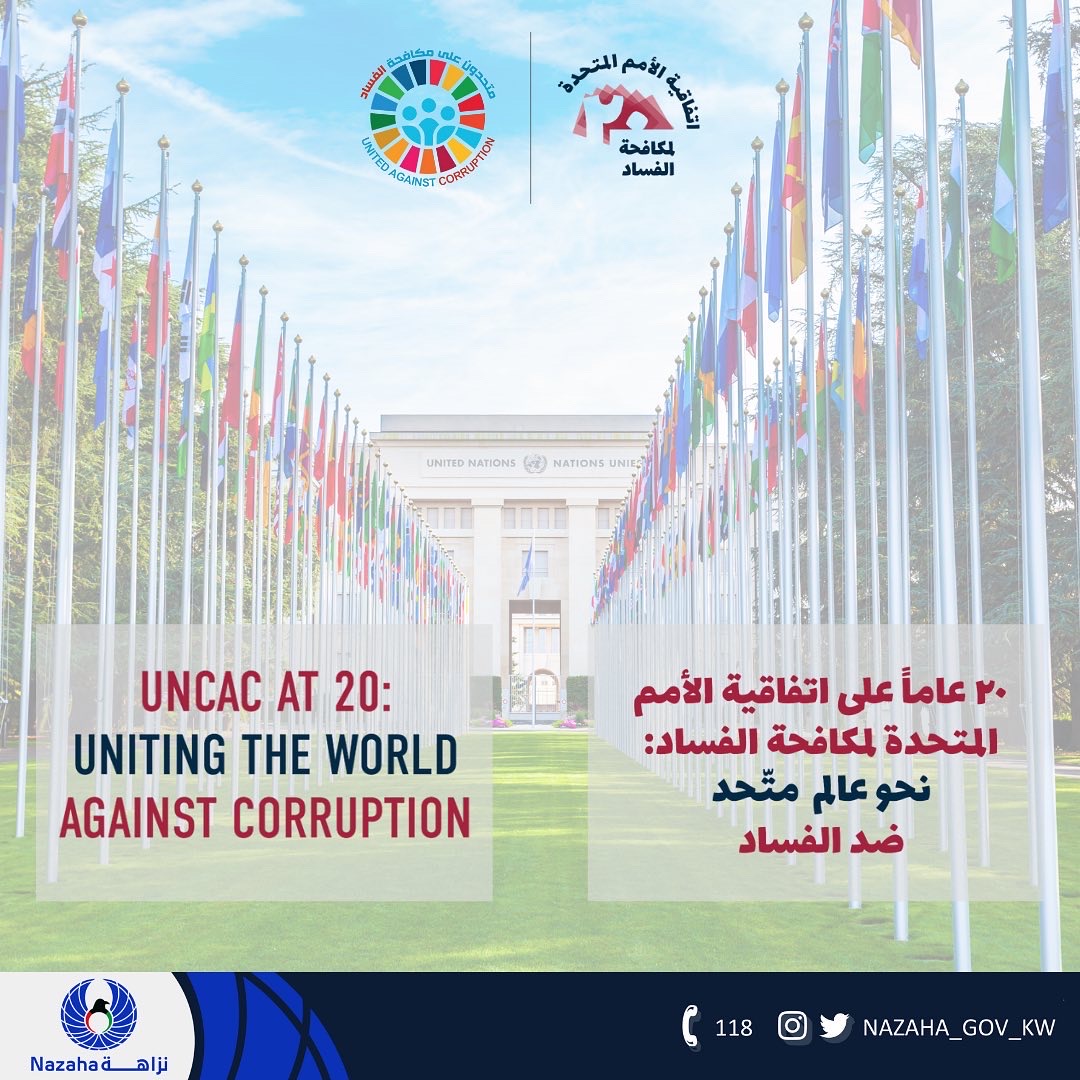
The United Nations marks the 9 December as the International Anti-Corruption Day (IACD) to raise awareness on corruption and the means to combat it.
In a press release, Kuwait Anti-Corruption Authority (Nazaha) said that the IACD this year marks 20 years after the United Nations Convention against Corruption (UNCAC) was signed in December 2003. Therefore, this year’s theme is “UNCAC at 20: United against Corruption.” The UN has praised the sincere national efforts leading to the signing of the UNCAC, which has reached 189 State Parties in 2022.
Nazaha mentioned the progress made by the State of Kuwait in implementing the UNCAC, combatting corruption, and promoting integrity and transparency in economic and administrative transactions. It said that these efforts led to ensuring the rational management of state funds, resources and property and their optimal use. Nazaha added that one of the most important achievements in that regard is its own establishment as a neutral and independent anticorruption authority that is responsible for implementing the UNCAC in light of Law No. 2 of 2016. This is in addition to developing mechanisms to receive and verify reports of suspected corruption crimes and referring them to the competent authorities, while providing protection and rewards for whistleblowers.
Nazaha also explained its efforts aimed at strengthening national legislation to combat corruption. It mentioned, as an example, the issuance of the Right to Information Law No. 12 of 2020 as well as referring other draft laws to the competent authorities. These laws, Nazaha said, contribute to promoting transparency and integrity in line with the UNCAC and including:
- Draft law on prohibiting conflicts of interest;
- Draft law on amending some provisions of the Penal Code to expand the scope of liability of legal persons in corruption crimes;
- Legislative amendments to Nazaha’s establishment-law to include encouraging and protecting whistleblowers in the private sector.